What is SNAP?

With the arrival of a new governor and the start of a new legislative session, the Safety-Net Association of Pennsylvania (SNAP) has prepared a series of four papers for leaders of the new Wolf administration and legislative and committee leaders and staff.

Safety-Net Association of Pennsylvania logoThe first paper, “What is SNAP?”, is an introduction to the Safety-Net Association of Pennsylvania:  what safety-net hospitals are, where they are located, whom they serve, and how they differ from other acute-care hospitals in the state.
See “What is SNAP?” here, on the association’s web site.
2015-01-15T06:00:06+00:00January 15th, 2015|Safety-Net Association of Pennsylvania|Comments Off on What is SNAP?

SNAP Warns of Challenges Ahead

As Pennsylvania lawmakers contemplate the state’s FY 2015 budget, the Safety-Net Association of Pennsylvania has issued a new position paper reminding those officials of the challenges the state’s private safety-net hospitals face in the current environment and the need for adequate, stable funding as they tackle those challenges.
Safety-Net Association of Pennsylvania logoAmong those challenges are low-income patients with distinct needs, major cuts in federal Medicare payments that especially target safety-net hospitals, and powerful economic forces marshaled by government, insurers, and others that seek to compel hospitals to deliver care in different ways, be paid differently for their efforts, align their incentives differently with other providers, and invest heavily in information technology.
Pennsylvania’s safety-net hospitals are prepared to do all these things, but to achieve such progress, they need financial stability and predictability: they need to know that their Medical Assistance funding will not be at risk as the state experiences various budget challenges.
Read SNAP’s perspective on these issues in its new position paper, “Pennsylvania’s Safety-Net Hospitals: The Need for Stable and Predictable Funding Amid Increasing Challenges,” which can be found here, on SNAP’s web site.

2014-06-30T06:00:31+00:00June 30th, 2014|Pennsylvania Medicaid policy, Pennsylvania state budget issues, Safety-Net Association of Pennsylvania|Comments Off on SNAP Warns of Challenges Ahead

Protect Uncompensated Care Payments, SNAP Tells State Officials

Although only 25 percent of the state’s acute-care hospitals, Pennsylvania’s private safety-net hospitals account for 45 percent of the $1 billion in uncompensated care those hospitals provide to uninsured Pennsylvanians every year.
And now, as the governor and legislature consider the state’s FY 2015 budget, the Safety-Net Association of Pennsylvania is urging those officials to preserve state payments that help qualified hospitals with those uncompensated care costs and enable them to continue constituting the core of Pennsylvania’s health care safety net.
Safety-Net Association of Pennsylvania logoTobacco Uncompensated Care Fund payments are supplemental state payments to hospitals that provide significant amounts of uncompensated care; they are underwritten by proceeds from the national master tobacco settlement of 1998 and matched by the federal government.  As lawmakers work on the state’s FY 2015 budget, SNAP is urging them to expend available FY 2014 funding already authorized for this purpose and not to use FY 2015 tobacco settlement funding for any purpose other than what was prescribed in Act 71 of 2013.
These views and background information on the role private safety-net hospitals play in caring for low-income, Medicaid-covered, and uninsured Pennsylvanians are addressed in a new SNAP position paper, “The Importance of Preserving Uncompensated Care Payments.”  Find that position paper here.

2014-06-27T06:00:37+00:00June 27th, 2014|Pennsylvania Medicaid policy, Pennsylvania state budget issues|Comments Off on Protect Uncompensated Care Payments, SNAP Tells State Officials

PA Safety-Net Hospitals Mean Jobs

While providing most of the care to Pennsylvania’s Medicaid and uninsured populations, the state’s 41 private safety-net hospitals also employ more people than other hospitals and pay better wages than most employers.
Safety-Net Association of Pennsylvania logoThey also are among the biggest employers in their communities, drive local economic development, and generate millions in local and state tax revenue.
As state lawmakers consider Pennsylvania’s FY 2015 budget, the Safety-Net Association of Pennsylvania urges them to preserve adequate funding for the state’s Medicaid program so these hospitals can continue their work serving Pennsylvanians in need and functioning as one of the state’s major economic engines.
Read more about the outsized role private safety-net hospitals play in Pennsylvania’s health care safety net and its economy in the new SNAP paper “Pennsylvania Safety-Net Hospitals:  Economic Engines Driving Pennsylvania Communities,” which can be found here.

2014-06-26T06:00:56+00:00June 26th, 2014|Pennsylvania state budget issues, Safety-Net Association of Pennsylvania|Comments Off on PA Safety-Net Hospitals Mean Jobs

SNAP Speaks Out on PA Budget Issues

In a series of three new position papers, the Safety-Net Association has laid out the case for why Pennsylvania needs to fund its Medicaid program adequately in the state’s upcoming 2015 fiscal year.
The first paper, “Pennsylvania Safety-Net Hospitals:  Economic Engines Driving Pennsylvania Communities,” documents the degree to which safety-net hospitals not only provide significant numbers of jobs but also offer higher wages than other hospitals and other Pennsylvania employers.
Safety-Net Association of Pennsylvania logoThe second paper, “The Importance of Preserving Uncompensated Care Payments,” notes that Pennsylvania’s safety-net hospitals, just 25 percent of the state’s acute-care hospitals, provide nearly 50 percent of the $1 billion worth of uncompensated care hospitals in the state provide every year.  The state helps underwrite some of those costs through Tobacco Uncompensated Care fund payments – proceeds of the national tobacco settlement of 1998 – but that funding is now in jeopardy.
And the third paper, “The Need for Stable and Predictable Funding Amid Increasing Challenges,” outlines the enormous and at times conflicting pressures that government and others are exerting on hospitals and explains that while safety-net hospitals look forward to these challenges, they need stable and predictable Medicaid funding to help them rise to the occasion.
SNAP issues these papers as lawmakers in Pennsylvania struggle with an FY 2014 revenue shortfall of more than $500 million and an anticipated shortfall of another $880 million in the coming 2015 fiscal year.
See SNAP’s three new position papers here.

2014-06-20T06:00:20+00:00June 20th, 2014|Pennsylvania Medicaid policy, Pennsylvania state budget issues, Safety-Net Association of Pennsylvania|Comments Off on SNAP Speaks Out on PA Budget Issues

Late Budget for PA?

Pennsylvania’s constitution calls for the state to adopt a budget for the next fiscal year by June 30, the end of its fiscal year, but it is looking more and more as if the legislature and governor will miss that deadline this year.
Although budgets typically come easily when the same party controls the governor’s mansion and both chambers of the General Assembly, the state’s revenue shortfall, a structural deficit that will carry over into next year, and the introduction of additional issues into the budget process appear to be slowing progress toward adopting a spending plan for the state’s 2015 fiscal year.
To reinforce the notion that June 30 may come and go without a budget adopted, state Senate majority leader Dominic Pileggi recently told members of his Republican caucus to put their fourth of July celebration plans on hold because their work for the legislative season may not be done.
At stake for Pennsylvania’s safety-net hospitals is funding for the state’s Medicaid program.  The budget includes numerous items that may prove tempting for officials to prune in search of money to close the current revenue shortfall.  Most tempting may be millions in Tobacco Uncompensated Care Fund revenue frozen by the Corbett administration last year in response to an arbitrator’s decision to reduce the state’s proceeds from the national tobacco settlement.
Tobacco Uncompensated Care funds help underwrite some of the $1 billion in charity care Pennsylvania’s hospitals provide annually – more than 40 percent of it provided by the 25 percent of acute-care hospitals in the state that are safety-net hospitals.  The Safety-Net Association of Pennsylvania (SNAP) is conveying its concern about the possibility of reducing this funding to legislators.
Learn more about the potential delay in adopting a state budget in this PA Politics report and this York Dispatch article.

No Observation Rate Yet for PA Medicaid

The Pennsylvania Department of Public Welfare has published a notice in the Pennsylvania Bulletin continuing its current payment methodology under the state’s Medicaid program but noting that it still has not developed an observation rate for the program.
Last year the state indicated that it wanted to establish such an observation rate, but it has not yet done so.  The new notice states that

The Department also announced its intent to establish an observation rate for hospital cases for which an inpatient admission is not medically necessary, but medical observation of a patient is required. The Department received multiple public comments concerning an intended observation rate. At this time, the Department plans to develop a payment policy and rates for observation services and will provide an opportunity for public comment in a future notice of intent.

At the time the state expressed an interest in developing an observation rate, the Safety-Net Association of Pennsylvania wrote to the Department of Public Welfare expressing support for the concept.  Read SNAP’s letter here.
Find the entire Pennsylvania Bulletin notice here.

2014-05-19T06:00:51+00:00May 19th, 2014|Pennsylvania Bulletin, Pennsylvania Medicaid policy|Comments Off on No Observation Rate Yet for PA Medicaid

Report Questions Fairness of Medicare Quality and Incentive Programs

A draft technical report by the National Quality Forum has called into question the fairness of Affordable Care Act Medicare programs that seek to provide financial incentives to hospitals that meet selected quality care standards and penalize those that fail to meet those standards.
According to the report, which was commissioned by the Obama administration, these programs unfairly penalize hospitals that care for especially large numbers of low-income seniors – hospitals like those that belong to the Safety-Net Association of Pennsylvania.
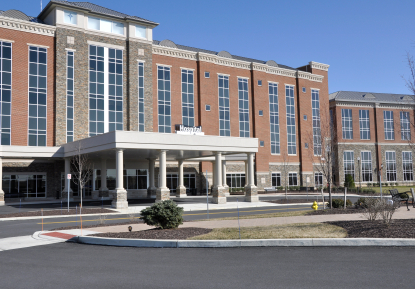
HospitalThe report notes, according to the New York Times, that

Low-income people may be unable to afford needed medications or transportation to doctor’s offices and clinics, the panel said. If they have low levels of formal education or literacy, they may have difficulty understanding or following written instructions for home care and the use of medications. In addition, the clinics and hospitals they use may lack the resources and high tech equipment needed to diagnose and treat illnesses.

Among the programs cited for this problem are Medicare’s value-based purchasing program and its hospital readmissions reduction program.
Read more about the programs’ challenges, as well as the views of those who believe the programs are working as intended and should not be adjusted, in this New York Times article.  Go here, to the National Quality Forum’s web site, for a direct link to the study, titled “Risk Adjustment for Socioeconomic Status or Other Sociodemographic Factors.”

2014-04-28T10:41:20+00:00April 28th, 2014|Affordable Care Act, Safety-Net Association of Pennsylvania|Comments Off on Report Questions Fairness of Medicare Quality and Incentive Programs

Public Comments on PA Medicaid Expansion Plan: Thumbs Down

Most of the people who submitted formal comments to the federal government about Pennsylvania’s plan to expand its Medicaid program wrote in opposition to the proposal.
The proposal, part of the Corbett administration’s “Healthy Pennsylvania” plan, calls for the state to use federal Medicaid funds to purchase private health insurance for people newly eligible for Medicaid.
According to a Community Legal Services of Philadelphia review completed two days before the April 11 submission deadline, 95 percent of those who expressed an opinion about the proposal opposed it, three percent supported it, and two percent offered mixed views.
The Safety-Net Association of Pennsylvania submitted formal comments expressing support for the Medicaid expansion proposal.  SNAP’S comments can be found here.
Read a report about the comments, including why various groups did or did not support the proposal, in this Philadelphia Inquirer article.

2014-04-17T06:00:23+00:00April 17th, 2014|Healthy PA, Pennsylvania Medicaid policy, Safety-Net Association of Pennsylvania|Comments Off on Public Comments on PA Medicaid Expansion Plan: Thumbs Down

Deadline for Commenting on PA Medicaid Expansion Proposal Approaches

The deadline for interested parties to submit formal comments to the federal government about Pennsylvania’s request for a waiver from selected federal Medicaid requirements in expanding its Medicaid program is this Friday, April 11 at 6:00 a.m.
Interested parties may submit their comments here.
Safety-net hospitals interested in submitting comments are invited to borrow from SNAP’s comment letter, which can be found here.

2014-04-08T06:00:37+00:00April 8th, 2014|Healthy PA, Pennsylvania Medicaid policy|Comments Off on Deadline for Commenting on PA Medicaid Expansion Proposal Approaches
Go to Top