MFAR Backlash Continues

Diverse health care and government interests are rallying around their opposition to the proposed Medicaid fiscal accountability rule.

Bookshelf with law booksThe regulation, proposed by the Centers for Medicare & Medicaid Services in November would impose new limits on the ability of states to finance their share of their Medicaid spending, potentially jeopardizing provider payments and the ability of high-volume Medicaid providers to operate without suffering great losses.

In all, CMS received more than 4200 written comments in response to the proposed regulation, most of them expressing opposition.  Among those doing so were state governments, the National Governors Association, hospitals and hospital associations, nursing home operators, and health advocacy organizations.  Also among them was the Safety-Net Association of Pennsylvania.  In summarizing its opposition, SNAP wrote in a formal comment letter to CMS on behalf of Pennsylvania safety-net hospitals that

SNAP is concerned that this proposed regulation would inappropriately restrict the state’s ability to finance the non-federal share of the Medicaid program, would impose significant additional regulatory burdens – the cost of which would far outstrip their benefit – would inappropriately introduce subjectivity into the application of previously clear and objective regulatory standards, and is beyond the scope of the statutory authority granted to CMS.

See SNAP’s entire letter here.

Learn more about the Medicaid fiscal accountability rule, what it seeks to do, and why so many oppose in the Stateline article “Medical Groups Slam Trump Medicaid Rule.”


2020-03-04T06:00:15+00:00March 4th, 2020|Federal Medicaid issues, Medicaid supplemental payments|Comments Off on MFAR Backlash Continues

SNAP Rallies PA Delegation to Oppose MFAR

A proposed federal Medicaid regulation could limit Pennsylvania’s ability to finance its Medicaid program and jeopardize supplemental payments to the state’s private safety-net hospitals, so SNAP has asked members of the state’s congressional delegation to sign a letter to CMS Administrator Seema Verma asking her to reconsider the potentially damaging Medicaid fiscal accountability regulation.

Safety-Net Association of Pennsylvania logoIn its letter to members of the state’s congressional delegation, SNAP wrote on behalf of private Pennsylvania safety-net hospitals that

The proposed Medicaid fiscal accountability regulation (MFAR) would, if implemented, impose new limits on how states may raise their share of funds to support their Medicaid programs. If adopted, the commonwealth would face a serious challenge raising the money it needs to finance its share of the cost of its Medicaid program. In addition, MFAR would take a great deal of states’ Medicaid policy-making authority away from state governments and give it instead to the federal Department of Health and Human Services.

Two members of the state’s congressional delegation, Representatives Brendan Boyle (D-Montgomery/Philadelphia) and Mike Kelly (R-Butler/Crawford/Erie/Lawrence/Mercer), have written a bipartisan letter to be sent to CMS Administrator Seema Verma asking her to reconsider the troubling aspects of MFAR.  SNAP wrote to members of the state’s congressional delegation asking them to sign onto the letter.

Go here to see the full SNAP letter to the delegation.


2020-03-03T06:00:10+00:00March 3rd, 2020|Federal Medicaid issues, Pennsylvania Medicaid policy, Uncategorized|Comments Off on SNAP Rallies PA Delegation to Oppose MFAR

Fitch: Medicaid Block Grants, MFAR Threaten States, Providers

Medicaid block grants and the proposed Medicaid fiscal accountability regulation (MFAR) pose new financial threats to providers and states, according to Fitch Ratings, the financial rating company.

MFAR poses the greater threat, Fitch believes, noting in a new analysis that it could

…reduce total Medicaid spending nationally by $37 billion and $44 billion annually…and by $23 billion to $30 billion for hospitals alone.  States, and to some extent providers, would respond to MFAR’s implementation with measures to mitigate the negative fiscal implications.

Bookshelf with law booksBlock grants, through what has been named the Healthy Adult Opportunity program, also pose a threat, with Fitch explaining that

Capping federal Medicaid contributions, even for a subset of beneficiaries, poses risks to state budgets and those entities reliant on state funding, including local governments and providers.  States would need to find revenue or cost savings, either in Medicaid or elsewhere, to offset reduced federal contributions.

Because Pennsylvania safety-net hospitals care for more Medicaid patients than the typical hospital, both proposed policy changes have a potentially greater impact on them.

Last month SNAP conveyed its opposition to the proposed MFAR regulation in a formal comment letter to the Centers for Medicare & Medicaid Services in response to the regulation’s publication late last year.  Pennsylvania Governor Tom Wolf has already rejected the idea of using block grants in the state’s Medicaid program.

Learn more about the potential impact of the proposed Medicaid fiscal accountability regulation and Medicaid block grants in the Fitch Ratings analysis “Fitch Rtgs: Medicaid Changes Will Affect States, NFP Healthcare Providers.”

2020-02-20T06:00:08+00:00February 20th, 2020|Federal Medicaid issues, Pennsylvania Medicaid, Pennsylvania safety-net hospitals, Safety-Net Association of Pennsylvania|Comments Off on Fitch: Medicaid Block Grants, MFAR Threaten States, Providers

Wolf Administration Proposes New Human Services Initiatives for FY 2021

New human services efforts to support vulnerable populations are a major part of Governor Tom Wolf’s proposed $36.06 billion FY 2021 budget for Pennsylvania.

The proposed budget, presented to the state legislature earlier this week, includes the following new initiatives:
  • creating pathways to success in the workforce for low-income Pennsylvanians
  • increasing the minimum wage to $15
  • increasing Department of Human Services staffing to support licensing and oversight
  • supporting adults in long-term-care facilities
  • legal services for vulnerable populations
  • direct care worker comprehensive training
  • commitment to performance-based metrics, accountability, and transparency in services and licensing
  • supporting vulnerable populations through home- and community-based services and reducing waiting lists
  • prevention services to support at-risk families
  • improving food security while supporting agriculture

Go here to see DHS’s presentation of these initiatives.

In addition, the Safety-Net Association of Pennsylvania has prepared a detailed memo describing the proposed FY 2021 budget’s implications for Pennsylvania safety-net hospitals and the state’s Medicaid program.  For a copy of this memo, use the “contact us” link in the upper right-hand corner of this page.

SNAP Asks Feds to Withdraw Medicaid Financing Regulation

CMS should withdraw its proposed Medicaid fiscal accountability regulation, SNAP has suggested in a formal comment letter to the federal agency in response to a new regulation it proposed in November.

Safety-Net Association of Pennsylvania logoAccording to the comment letter SNAP submitted to the Centers for Medicare & Medicaid Services,

SNAP is concerned that this proposed regulation would inappropriately restrict the state’s ability to finance the non-federal share of the Medicaid program, would impose significant additional regulatory burdens – the cost of which would far outstrip their benefit – would inappropriately introduce subjectivity into the application of previously clear and objective regulatory standards, and is beyond the scope of the statutory authority granted to CMS.

Learn more about SNAP’s views on the proposed Medicaid fiscal accountability regulation and why SNAP believes CMS should withdraw it in SNAP’s formal comment letter.

2020-02-03T06:00:47+00:00February 3rd, 2020|Federal Medicaid issues, Safety-Net Association of Pennsylvania|Comments Off on SNAP Asks Feds to Withdraw Medicaid Financing Regulation

PA Safety-Net Hospitals Step Up When One of Their Own Closes

A core group of safety-net hospitals, led by SNAP members, has filled the gap left by the closure of Hahnemann University Hospital, another safety-net hospital, in Philadelphia.

Safety-Net Association of Pennsylvania logoThe Philadelphia Business Journal reports that since Hahnemann’s closing was announced during the summer, ER volume has risen 15 percent, admissions have risen 12 percent, and births have risen more than 50 percent at Thomas Jefferson University Hospital, a SNAP member.  Meanwhile, SNAP member Pennsylvania Hospital has seen its ER visits rise nine percent, SNAP member Penn Presbyterian Medical Center has seen its ER volume increase five percent, and SNAP member the Hospital of the University of Pennsylvania has seen its ER volume rise five percent.

Patient volume also has risen significantly at Temple University Hospital.

Learn more about how Pennsylvania safety-net hospitals, including SNAP members, have filled the void left by the closing of another safety-net hospital in the Philadelphia Business Journal article “Hahnemann fallout: Nearby hospitals see uptick in ER visits, admissions.”

2019-10-25T06:00:53+00:00October 25th, 2019|Pennsylvania safety-net hospitals, Safety-Net Association of Pennsylvania|Comments Off on PA Safety-Net Hospitals Step Up When One of Their Own Closes

PA to Invest in Philadelphia Community Served by Safety-Net Hospitals

Pennsylvania will spend more than $4 million on health-related services in the North Philadelphia Enterprise Zone, an area in which nearly 13 percent of the state’s Medicaid population resides.

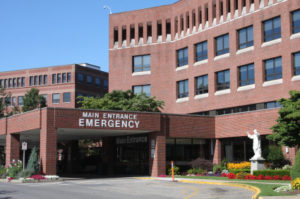
Hospital buildingThis area is served almost exclusively by Pennsylvania safety-net hospitals and recently suffered a major loss when one of those providers, Hahnemann University Hospital, closed its doors.  According to a SNAP analysis, more than 50 percent of the patients previously served by Hahnemann will now turn for care to SNAP members Thomas Jefferson University Hospital (18.3 percent), Pennsylvania Hospital (11.3 percent), the Hospital of the University of Pennsylvania (nine percent), Penn Presbyterian Medical Center (4.7 percent), Jefferson Health Northeast (4.1 percent), and Mercy Hospital Philadelphia (3.2 percent).

The $4 million will be spent on expanded home visiting services for families with children, eviction prevention assistance for low-income families, and programs that help residents move from public assistance to jobs.

Learn more in the Philadelphia Business Journal article “State Invests in North Philadelphia’s Health Enterprise Zone.”


2019-10-22T06:00:28+00:00October 22nd, 2019|Pennsylvania safety-net hospitals, Safety-Net Association of Pennsylvania|Comments Off on PA to Invest in Philadelphia Community Served by Safety-Net Hospitals

SNAP Asks PA Delegation to Support Another Medicaid DSH Cut Delay

In a letter to members of Pennsylvania’s congressional delegation, SNAP has asked those members to support another two-year delay of Medicaid disproportionate share (Medicaid DSH) cuts mandated by the Affordable Care Act.

Safety-Net Association of Pennsylvania logoIn the message, SNAP notes the important role Medicaid DSH payments play in helping private safety-net hospitals care for the many uninsured patients who continue to turn to them for care.

If the cut is not delayed, Pennsylvania will see its Medicaid DSH allotment from the federal government fall 40 percent in FY 2020 and 80 percent annually from FY 2021 through FY 2025.

See SNAP’s message to PA delegation members here.


2019-10-04T06:00:52+00:00October 4th, 2019|Federal Medicaid issues, Medicaid supplemental payments, Pennsylvania Medicaid, Pennsylvania Medicaid policy, Pennsylvania safety-net hospitals, Safety-Net Association of Pennsylvania|Comments Off on SNAP Asks PA Delegation to Support Another Medicaid DSH Cut Delay

SNAP Thanks PA Delegation for Supporting Short-Term Medicaid DSH Cut Delay

SNAP has written to members of Pennsylvania’s congressional delegation to thank them for voting for a temporary delay of Medicaid disproportionate share (Medicaid DSH) cuts mandated by the Affordable Care Act.

Safety-Net Association of Pennsylvania logoThe Medicaid DSH delay was included in a continuing resolution that Congress passed to fund the federal government temporarily while legislators continue to negotiate an FY 2020 federal budget.  The continuing resolution and the Medicaid DSH cut delay run through November 21.

Medicaid DSH cuts mandated by the Affordable Care Act have already been delayed several times by Congress, but if not delayed again, Pennsylvania will see its federal Medicaid DSH allotment fall 40 percent in FY 2020 and 80 percent a year from FY 2021 through FY 2025.

See SNAP’s thank you note to Pennsylvania’s congressional delegation here.


2019-10-03T06:00:35+00:00October 3rd, 2019|DSH hospitals, Federal Medicaid issues, Medicaid supplemental payments, Pennsylvania Medicaid, Pennsylvania Medicaid policy, Pennsylvania safety-net hospitals|Comments Off on SNAP Thanks PA Delegation for Supporting Short-Term Medicaid DSH Cut Delay

Medicaid DSH Delay Advances in Energy and Commerce Committee

Medicaid disproportionate share cuts would be delayed for two years under a proposal advanced last week by the Health Subcommittee of the House Energy and Commerce Committee.

The Medicaid DSH cuts, mandated by the Affordable Care Act, have already been delayed three times by Congress and could be on their way to a fourth delay if the proposal advanced by the Health Subcommittee is endorsed by the Energy and Commerce Committee and works its way to the full House of Representatives, where such a proposal is thought to enjoy wide support.

The Safety-Net Association of Pennsylvania supports this delay of Medicaid DSH cuts.  Earlier this year, SNAP asked members of the state’s congressional delegation to join a campaign in the House of Representatives to delay this cut.

Learn more about the possibility of another delay of Medicaid DSH cuts in the HealthLeaders article “House Panel Advances Surprise Bill Package.”


2019-07-16T06:00:31+00:00July 16th, 2019|DSH hospitals, Federal Medicaid issues, Medicaid supplemental payments|Comments Off on Medicaid DSH Delay Advances in Energy and Commerce Committee
Go to Top