
Shifting PA Medicaid to a PDL
Pennsylvania’s planned shift to a preferred drug list for its Medicaid program is the subject of a new analysis of the projected impact of such a change.
 Earlier this year, the Department of Human Services announced its intention to implement a preferred drug list in the state’s Medicaid program. That PDL would apply to both the fee for service and managed care Medicaid programs.
During this year’s budget proceedings, Pennsylvania’s Human Services Code was amended to require an analysis of “the projected cost to the medical assistance managed care organization [sic] and the projected supplemental rebates that could be obtained” by moving to a PDL.
That analysis has now been completed. It concluded that the state
…will save $85 million annual through implementation of a Statewide PDL. The Statewide PDL will allow the Department [of Human Services] to receive an additional $261 million in pharmacy rebates, which will more than offset the estimated increase to managed care organization (MCO) expenditures of $176 million, considering their additional costs and loss of market share rebates.
The analysis commissioned by DHS is now available. To learn more about the implications of a state-wide PDL for the state, for Medicaid managed care organization, and for Medicaid beneficiaries, read “Fiscal Impact Analysis of Medical Assistance Program Uniform Statewide Preferred Drug List, 2019 Report.”
The PDL will take effect on January 1, 2020 and has been posted on a DHS web site here.
 Today, Lyft is working with approximately 35 state Medicaid programs while Uber, at least so far, participates only in Arizona’s program.
 In the message, SNAP notes the important role Medicaid DSH payments play in helping private safety-net hospitals care for the many uninsured patients who continue to turn to them for care.
 Cuts in Medicaid disproportionate share hospital (Medicaid DSH) allotments to states were mandated by the Affordable Care Act based on the expectation that the law would greatly reduced the number of uninsured Americans. While this has been the case, the decline in the number of uninsured has not been as great as expected. For this reason, Congress has on several occasions delayed the required Medicaid DSH cut.
 The proposal will be considered by the Senate Health and Human Services Committee.
 As envisioned by the state, the current program, in which individual counties contract independently with transportation providers to serve their residents on Medicaid, was to be replaced by a regional approach in which the state contracts with three vendors to serve all of Pennsylvania. Objections by members of the state legislature and county officials, however, led to legislation that requires the Department of Human Services, Department of Transportation, and Department of Aging to study the implications of such a change for patients and taxpayers and to report their preliminary findings to the legislature in September.
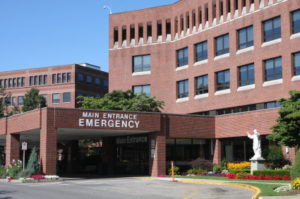 The report, published on the JAMA Network Open, found that ER visits by uninsured patients fell from 16 percent to eight percent between 2006 and 2016, with most of this decline after 2014, while uninsured discharges fell from six percent to four percent.
 Included in this edition are articles about: