SNAPShots

SNAPShots

COVID-19 Update: March 19, 2020

The following is a summary of the major COVID-19-related developments in Pennsylvania for March 19, 2020 as of 6:30 p.m.

Pennsylvania Administration

Governor’s Order Closing State Businesses
Early in the evening, Governor Tom Wolf announced that he was ordering the immediate closing of what he called “non-life-sustaining businesses in Pennsylvania.”  See his news release on the order here, the order itself here, and a list of types of businesses and whether they are or are not “life-sustaining” here.

Pennsylvania Department of State Licensure Exceptions and Fast Track

The Pennsylvania Department of State Bureau of Professional and Occupational Affairs, in conjunction with Governor Wolf, issued a press release announcing that the governor had granted the department’s request for a suspension to permit licensed practitioners in other states to provide services to Pennsylvanians without obtaining a Pennsylvania license during the emergency.  The announcement also makes clear that “no Pennsylvania law prohibits the practice of telemedicine.”  Under the exception, out-of-state practitioners must:

  • Be licensed and in good standing in their home state, territory or country.
  • Provide the Pennsylvania board from which they would normally seek licensure with the following information prior to practicing telemedicine with Pennsylvanians:
  • their full name, home or work mailing address, telephone number, and email address; and
  • their license type, license number or other identifying information that is unique to that practitioner’s license, and the state or other governmental body that issued the license.

The full text of the document can be found here.

Pennsylvania Department of Drug and Alcohol Programs Authorizing Additional Take-home Opioid Treatment Medicine

On March 16, the federal Substance Abuse and Mental Health Services Administration provided additional guidance to Opioid Treatment Programs.  Today, Pennsylvania’s Department of Drug and Alcohol Programs issued a licensing alert taking advantage of that guidance to suspend the prohibition on patients receiving a greater-than-two-week supply of medication to take home.  The full text of the document can be found here.

Pennsylvania Department of Human Services Shares COVID Response Overview

On Tuesday, March 17 Pennsylvania’s Department of Human Services (DHS) hosted an invitation-only call to provider DHS stakeholders with an overview of its actions related to COVID-19.  Last night DHS issued a summary of that presentation.  Please find that summary attached.

Pennsylvania Department of Health Daily Update

  • The Secretary stated that the Department of Health (DOH) is working with hospitals to evaluate whether elective procedures are necessary and to delay them as appropriate.
  • DOH has directed hospitals to update their emergency plans to include COVID-19 and to implement those plans as of 11:59 tonight.
  • Although the number of diagnoses continues to rise, hospitalizations in Pennsylvania are on par with nationwide statistics at roughly 10 percent of the diagnosed population.
  • The Secretary is urging small businesses to comply with the social distancing protocols and called on small business owners to contact the Department of Community and Economic Development to identify financial resources to assist them through this period.
  • She reminded citizens that limiting individual exposure does not require a mask, stating that the limited personal protective equipment supplies are best used by frontline responders.

Pennsylvania Legislature

House Chamber of the State HouseThe following summary of PA legislative actions was compiled by Cynthia Fernandez of Spotlight PA and Gillian McGoldrick of Lancaster Online.

Limiting Disaster Powers

When Gov. Tom Wolf declared a disaster emergency on March 6, he was able to  claim expansive powers. Rep. Russ Diamond (R., Lebanon) plans to issue a  resolution to terminate  Wolf’s COVID-19 emergency declaration “if the need arises.”

Privacy

Sen. Doug Mastriano (R., Franklin) is drafting a   resolution   that would call on the federal government to suspend privacy regulations for people who have tested positive for COVID-19. There should be “full disclosure of anyone who came within immediate contact of any contaminated citizen,” Mastriano said in a statement, “until the COVID-19 crisis passes.”

Pa. Coronavirus Cases

As of March 18, 2020, the Pa. Department of Health reports that there are 133 positive cases of COVID-19 in Pennsylvania.

Total cases/Deaths

VIEW THE INTERACTIVE MAP HERE:  https://www.pennlive.com/news/2020/03/evictions-student-loans-pssas-and-more-what-pa-lawmakers-are-proposing-in-response-to-the-coronavirus.html

Rent

Lawmakers are  drafting a bill  to limit landlords’ right to evict tenants when a governor declares a state of emergency. The measure, from Rep. Mary Isaacson (D., Philadelphia) and Rep. Summer Lee (D., Allegheny), would “provide an exemption from eviction for workers who are unemployed, separated from their employment, or unable to find employment.”

Schools

Sen. Andy Dinniman (D., Chester) and Sen. Scott Martin (R., Lancaster) are drafting a bill that would   cancel the state PSSA and Keystone exams  for the remainder of this school year. The measure would also require the state Department of Education to waive federal testing requirements.

Dinniman is also drafting  a measure  that would give school districts authority to deliver online instruction until the end of the academic year.

Martin has  proposed a bill  that would require colleges and universities closed because of COVID-19 to refund all fees paid in advance, including room and board. The prorated refund would only apply from the date the institution shuttered through the end of the semester.

Sick Leave

Rep. Joe Hohenstein (D., Philadelphia) and Sen. Larry Farnese (D., Philadelphia)   want to require  paid sick leave for any workers left out by a federal bill on its way to President Donald Trump’s desk, which is limited to workers who need to care for their children. The legislation could leave 19.3 million workers without any sick pay, the Washington Post  reported.

The state legislation would also require employers to reinstate workers when they return from leave.

Small Businesses

To lessen the impact on small businesses,  Sen. Tom Killion (R., Chester) plans to introduce legislation  that would direct table game revenue to the Department of Community and Economic Development to create zero-interest loans.

Reps. Valerie Gaydos (R., Allegheny) and Jared Solomon (D., Philadelphia)  also plan to introduce legislation  to create low-to-no interest loans to help small businesses survive. The bill will outline two types of loans: one will be short-term funding to meet payroll and overhead expenses; the other will be for “long-term resiliency” to help businesses recover over time.

Student Loans

A measure by Rep. Malcolm Kenyatta (D., Philadelphia) would allow a   60-day grace period  for repayment of student loans issued by the Pennsylvania Higher Education Assistance Agency.

Taxes and Filing

Rep. David Rowe (R., Union) and Rep. Frank Ryan (R., Lebanon) are   writing a measure  that would suspend sales and personal income tax collection until the disaster declaration is lifted.

The IRS will keep its tax-filing deadline as April 15, but the U.S. Treasury announced Tuesday it will waive interest and penalties for 90 days after that date. Rep. Joe Ciresi (D., Montgomery)  plans to introduce legislation   that would apply a 60-day extension for Pennsylvanians to file state income taxes when the state is under a disaster declaration.

Voting

All Pennsylvanians are now eligible to vote by mail. Rep. Kevin Boyle (D., Philadelphia) wants to  encourage  that by mailing all voters that kind of ballot ahead of the April 28 primary.

Rep. Dan Williams (D., Chester) plans to introduce legislation to allow elections officials to   open votes submitted by mail  before the polls close. House Majority Leader Bryan Cutler (R., Lancaster)  previously said  this is a part of discussions with Gov. Tom Wolf to “clean-up” a comprehensive voting reform bill passed last year.

Workers’ Rights

A proposed state Senate bill would support workers while quarantined or in isolation during a public health emergency. Sen. Steve Santarsiero (D., Bucks) said in a  memo  to his colleagues that Pennsylvania does not have a law that addresses whether an employer can fire a worker under these conditions during a state of emergency.

A measure by Rep. Ed Neilson (D., Philadelphia) would provide  unemployment compensation for people who have been ordered to quarantine or isolate because of the coronavirus. His bill would not offer extended benefits to people who used paid time off or paid sick days during quarantine or isolation.

Federal

CMS Catastrophic Plan Coverage Guidance

Catastrophic coverage plans are generally prohibited from covering essential health benefits until a covered individual has met its deductible.  The U.S. Department of Health and Human Services has issued a notice informing plans that it will not enforce this provision as it relates to insurers amending their plans to provide pre-deductible coverage for services related to the diagnosis and treatment of COVID-19.  The full notice is available here.

CMS Medicaid and CHIP FAQ Released

The guidance describes the authority states have generally to respond to emergencies but has also been updated as of March 18 to include additional guidance specific to the response to COVID-19.  The updates generally provide additional clarity around telehealth.

There are also new sections on managed care flexibilities and 1115 waiver flexibilities, again generally focused on limiting the spread of person-to-person contact through the use of telehealth, remote monitoring, etc.  It is worth mentioning that this is federal guidance for state Medicaid programs so it describes what is possible but does not describe the actual conditions in any particular state.

The FAQ document is available here.

CMS Elective Surgery Guidance

CMS released guidance to limit non-essential adult elective surgery and medical and surgical procedures, including all dental procedures, in an effort to conserve critical resources such as ventilators and Personal Protective Equipment (PPE).  Decisions remain the responsibility of local health care delivery systems, including state and local health officials, and those surgeons who have direct responsibility to their patients.  To help with that decision-making, CMS offered a tiered framework of procedures that should be considered for postponement, taking into account the location (outpatient department, ambulatory surgery center, or hospital), the hospital’s COVID-19 patient census, the patient’s acuity, and more.  Click here to read the full guidance.  Click here to read the CMS press release.

HRSA Data Collection Activities

The Health Resources and Services Administration (HRSA) will not be going through notice and comment periods for data collection activities for the remainder of the emergency.  Under this authority, HRSA launched an information collection effort to support the Trump administration’s response to the COVID-19 pandemic, surveying HRSA-funded health centers on their involvement in the COVID-19 response, including whether they are offering diagnostic tests.  The agency will have to comply with relevant provisions within 30 days of the end of the emergency declaration.  The announcement is available here.

CDC Alters Timeline to Implement New ICD-10 Code for Coronavirus (see attached)

The Centers for Disease Prevention and Control (CDC) is taking the unprecedented step of invoking the National Emergencies Act to supersede the schedule for updating the ICD coding set defined within HIPAA.  Under this authority, CDC is establishing an effective date of April 1, 2020 for the new code as opposed October 1 date that would have been required under the normal statutory update schedule.  The full text of the announcement is available here.

Resources to Consult

Pennsylvania Department of Human Services

Main COVID-19 Page

COVID-19 Provider Resources

Press Releases

Pennsylvania Department of Health

Main COVID-19 Page

Pennsylvania Emergency Preparedness Guide

Centers for Disease Control and Prevention

Main COVID-19 Page

FAQ

CMS Posts COVID-19 FAQ for State Medicaid and CHIP Agencies

State Medicaid agencies and CHIP programs have received new guidance on the federal resources available to them to fight the COVID-19 national health emergency through a new FAQ published by the Centers for Medicare & Medicaid Services last week.

Among the issues addressed in the FAQ are eligibility, enrollment, benefits, cost sharing, workforce issues, telehealth, and more.  Health care providers may find this information useful when serving their patients.

See CMS’s news release describing the FAQ here and the FAQ itself here.

2020-03-17T06:00:50+00:00March 17th, 2020|Federal Medicaid issues|Comments Off on CMS Posts COVID-19 FAQ for State Medicaid and CHIP Agencies

MACPAC Meets

The Medicaid and CHIP Payment and Access Commission met for two days last week in Washington, D.C.

The following is MACPAC’s own summary of the sessions.

The February 2020 MACPAC meeting opened with a continuation of MACPAC’s examination of Medicaid’s role in maternal health, when Medicaid officials from Michigan, New Jersey, and North Carolina joined the Commission to discuss how their states are addressing maternal morbidity and mortality.* The Commission plans to include a chapter on maternal health in its June 2020 report to Congress. Commissioners later turned their attention to policy options for improving enrollment in the Medicare Savings Program.
The Commission later took a deep dive into value-based payment in Medicaid managed care. This three-part session began with findings from a series of interviews with state officials, managed care organizations, and other stakeholders aimed at understanding how states use managed care to promote payment reform, conducted by MACPAC contractor Bailit Health. Then, representatives from three of these organizations shared their reactions to the findings and talked about how value-based payment models are working in practice.* The session concluded with Commissioners’ perspectives on the study’s findings and the panelists’ reactions to them, and possible next steps.

The final session of the afternoon continued a line of inquiry begun at the October 2019 meeting: third-party liability coordination between Medicaid and TRICARE. MACPAC estimates that almost 1 million Medicaid enrollees have primary coverage through TRICARE, which provides health benefits for military personnel, military retirees, and their dependents. Commissioners explored making recommendations in the June report to improve coordination between the two programs.

On Friday, the Commission returned to the theme of improving care for dually eligible beneficiaries, looking more closely at the rise of so-called dual-eligible special needs plan (D-SNP) look-alikes and how changes in the Medicare Advantage market are affecting efforts to integrate care. Commissioners also reviewed a rule proposed in February that would, among other things, restrict the growth of look-alikes.

Following that session, the Commission discussed draft recommendations to improve integration of Medicare and Medicaid benefits for dually eligible beneficiaries. The February meeting wrapped up with a discussion of a forthcoming rule expected to affect the Medicaid eligibility determination process.

Supporting the discussion were the following briefing papers:

  1. State Medicaid Initiatives to Improve Maternal Health
  2. Improving Participation in the Medicare Savings Programs: Decisions on Draft Recommendations for the June Report to Congress
  3. State Strategies to Promote the Use of Value-Based Payments in Medicaid Managed Care
  4. Medicaid and TRICARE: Third-Party Liability Coordination
  5. How Changes in the Medicare Advantage Market Are Affecting Integration of Care for Dually Eligible Beneficiaries: Analysis and Comments on Proposed Rule
  6. Improving Integrated Care for Dually Eligible Beneficiaries: Decisions on Recommendations to be Included in June Report to Congress
  7. Forthcoming Rule on Program Integrity and Eligibility Determination Processes

Because they serve so many Medicaid and CHIP patients – more than the typical hospital – MACPAC’s deliberations are especially important to Pennsylvania safety-net hospitals.

MACPAC is a non-partisan legislative branch agency that provides policy and data analysis and makes recommendations to Congress, the Secretary of the U.S. Department  of Health and Human Services, and the states on a wide variety of issues affecting Medicaid and the State Children’s Health Insurance Program.  Find its web site here.

2020-03-06T06:00:04+00:00March 6th, 2020|Federal Medicaid issues, Pennsylvania safety-net hospitals|Comments Off on MACPAC Meets

PA Health Law Project Newsletter

The Pennsylvania Health Law Project has published its February 2020 newsletter Health Law News.

Included in this month’s edition are articles about:

  • Governor Wolf’s proposed FY 2021 Medicaid budget.
  • Challenges Pennsylvania Medicaid recipients have encountered obtaining services from their HealthChoices managed care plan and how to address them.
  • Implementation of the federal “public charge” regulation and whom it does – and does not – affect.

Read about these subjects and more in the Pennsylvania Health Law Project’s February 2020 newsletter.

2020-03-05T06:00:11+00:00March 5th, 2020|Federal Medicaid issues, HealthChoices, Pennsylvania Medicaid, Pennsylvania proposed FY 2021 budget|Comments Off on PA Health Law Project Newsletter

MFAR Backlash Continues

Diverse health care and government interests are rallying around their opposition to the proposed Medicaid fiscal accountability rule.

Bookshelf with law booksThe regulation, proposed by the Centers for Medicare & Medicaid Services in November would impose new limits on the ability of states to finance their share of their Medicaid spending, potentially jeopardizing provider payments and the ability of high-volume Medicaid providers to operate without suffering great losses.
In all, CMS received more than 4200 written comments in response to the proposed regulation, most of them expressing opposition.  Among those doing so were state governments, the National Governors Association, hospitals and hospital associations, nursing home operators, and health advocacy organizations.  Also among them was the Safety-Net Association of Pennsylvania.  In summarizing its opposition, SNAP wrote in a formal comment letter to CMS on behalf of Pennsylvania safety-net hospitals that

SNAP is concerned that this proposed regulation would inappropriately restrict the state’s ability to finance the non-federal share of the Medicaid program, would impose significant additional regulatory burdens – the cost of which would far outstrip their benefit – would inappropriately introduce subjectivity into the application of previously clear and objective regulatory standards, and is beyond the scope of the statutory authority granted to CMS.

See SNAP’s entire letter here.

Learn more about the Medicaid fiscal accountability rule, what it seeks to do, and why so many oppose in the Stateline article “Medical Groups Slam Trump Medicaid Rule.”


2020-03-04T06:00:15+00:00March 4th, 2020|Federal Medicaid issues, Medicaid supplemental payments|Comments Off on MFAR Backlash Continues

SNAP Rallies PA Delegation to Oppose MFAR

A proposed federal Medicaid regulation could limit Pennsylvania’s ability to finance its Medicaid program and jeopardize supplemental payments to the state’s private safety-net hospitals, so SNAP has asked members of the state’s congressional delegation to sign a letter to CMS Administrator Seema Verma asking her to reconsider the potentially damaging Medicaid fiscal accountability regulation.

Safety-Net Association of Pennsylvania logoIn its letter to members of the state’s congressional delegation, SNAP wrote on behalf of private Pennsylvania safety-net hospitals that

The proposed Medicaid fiscal accountability regulation (MFAR) would, if implemented, impose new limits on how states may raise their share of funds to support their Medicaid programs. If adopted, the commonwealth would face a serious challenge raising the money it needs to finance its share of the cost of its Medicaid program. In addition, MFAR would take a great deal of states’ Medicaid policy-making authority away from state governments and give it instead to the federal Department of Health and Human Services.

Two members of the state’s congressional delegation, Representatives Brendan Boyle (D-Montgomery/Philadelphia) and Mike Kelly (R-Butler/Crawford/Erie/Lawrence/Mercer), have written a bipartisan letter to be sent to CMS Administrator Seema Verma asking her to reconsider the troubling aspects of MFAR.  SNAP wrote to members of the state’s congressional delegation asking them to sign onto the letter.

Go here to see the full SNAP letter to the delegation.


2020-03-03T06:00:10+00:00March 3rd, 2020|Federal Medicaid issues, Pennsylvania Medicaid policy, Uncategorized|Comments Off on SNAP Rallies PA Delegation to Oppose MFAR

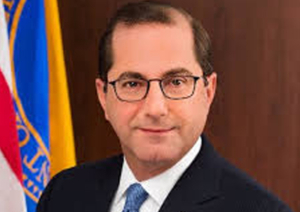
Azar: Budget Proposes Reducing Medicaid Matching $

The federal government would reduce its financial commitment to state Medicaid programs under the FY 2021 budget the Trump administration proposed earlier this month.

While testifying before the Senate Appropriations Committee’s Subcommittee on Labor, Health and Human Services and Education, Health and Human Services Secretary Alex Azar acknowledged that the administration’s proposed FY 2021 would eliminate the enhanced rate at which the federal government matches state funds used to serve individuals who enrolled in Medicaid through the Affordable Care Act’s Medicaid expansion provision.  That enhanced rate calls for the federal government to pay 100 percent of the costs associated with the Medicaid population during the first year of Medicaid expansion, eventually scaling down to 90 percent after 2020.  Nationally, the federal government’s matching rate for the pre-expansion population is 57 percent; that matching rate would not be affected by this proposal.

This aspect of the administration’s proposed FY 2021 budget has mostly flown under the radar since the budget’s release and has received little public attention.

In explaining the proposal, Azar said that enhanced funding for the Affordable Care Act’s Medicaid expansion population was biased against the disabled, women, and children.

Such a policy change could be a blow to safety-net hospitals in states like Pennsylvania, which added more than a half-million people to its Medicaid program through the Affordable Care Act’s Medicaid expansion provision.

Learn more about what Secretary Azar said about federal matching funds for state Medicaid programs in the McKnight’s Long-Term Care News article “Official confirms Trump budget proposed to eliminate enhanced Medicaid match.”


2020-02-28T06:00:34+00:00February 28th, 2020|Affordable Care Act, Federal Medicaid issues|Comments Off on Azar: Budget Proposes Reducing Medicaid Matching $

Fitch: Medicaid Block Grants, MFAR Threaten States, Providers

Medicaid block grants and the proposed Medicaid fiscal accountability regulation (MFAR) pose new financial threats to providers and states, according to Fitch Ratings, the financial rating company.

MFAR poses the greater threat, Fitch believes, noting in a new analysis that it could

…reduce total Medicaid spending nationally by $37 billion and $44 billion annually…and by $23 billion to $30 billion for hospitals alone.  States, and to some extent providers, would respond to MFAR’s implementation with measures to mitigate the negative fiscal implications.

Bookshelf with law booksBlock grants, through what has been named the Healthy Adult Opportunity program, also pose a threat, with Fitch explaining that

Capping federal Medicaid contributions, even for a subset of beneficiaries, poses risks to state budgets and those entities reliant on state funding, including local governments and providers.  States would need to find revenue or cost savings, either in Medicaid or elsewhere, to offset reduced federal contributions.

Because Pennsylvania safety-net hospitals care for more Medicaid patients than the typical hospital, both proposed policy changes have a potentially greater impact on them.

Last month SNAP conveyed its opposition to the proposed MFAR regulation in a formal comment letter to the Centers for Medicare & Medicaid Services in response to the regulation’s publication late last year.  Pennsylvania Governor Tom Wolf has already rejected the idea of using block grants in the state’s Medicaid program.

Learn more about the potential impact of the proposed Medicaid fiscal accountability regulation and Medicaid block grants in the Fitch Ratings analysis “Fitch Rtgs: Medicaid Changes Will Affect States, NFP Healthcare Providers.”

2020-02-20T06:00:08+00:00February 20th, 2020|Federal Medicaid issues, Pennsylvania Medicaid, Pennsylvania safety-net hospitals, Safety-Net Association of Pennsylvania|Comments Off on Fitch: Medicaid Block Grants, MFAR Threaten States, Providers

Verma Responds to MFAR Critics

CMS administrator Seema Verma addresses criticism of her agency’s proposed Medicaid fiscal accountability regulation in a new commentary on the CMS blog.

Critics of the so-called MFAR regulation have argued that the Centers for Medicare & Medicaid Services’ proposed regulation, if adopted, will lead to a reduction of federal funding for state Medicaid programs, jeopardize access to care and the financial health of providers by leading to a reduction of supplemental payments to high-volume Medicaid providers, and possibly even force some states to raise taxes to compensate for the loss of federal funding.

In her commentary Verma rebuts these criticisms, maintaining that the proposed regulation seeks to ensure that states pay their fair share of their Medicaid partnership with the federal government, raise that share in a manner consistent with federal guidelines, and spend it in ways that fall within regulatory standards.  She also maintains that the regulation will foster greater transparency and accountability for the Medicaid program.

Verma notes that more than 4000 stakeholders submitted written comments in response to the proposed regulation.  SNAP was among those commenters, writing that MFAR would give too much authority to federal regulators; create new administrative burdens for hospitals and state governments; and inappropriately limit state financing of their share of Medicaid spending.

Learn more from the Verma CMS blog commentary “Medicaid Fiscal Integrity: Protecting Taxpayers and Patients” and from SNAP’s letter in response to the proposed regulation.


2020-02-14T06:00:39+00:00February 14th, 2020|Federal Medicaid issues, Safety-Net Association of Pennsylvania|Comments Off on Verma Responds to MFAR Critics

Verma Responds to Medicaid Block Grant Critics

Last week the Trump administration unveiled its Healthy Adult Opportunity program, a new, optional, already-controversial approach to structuring state Medicaid programs.

Ever since, the program – essentially, Medicaid block grants – has been the subject of criticism from many public officials and health care stakeholders.

Now, Centers for Medicare & Medicaid Services administrator Seema Verma, who oversaw the development of Healthy Adult Opportunity, has responded to the program’s critics in an op-ed piece published in the Washington Post.  See her commentary “No, the Trump administration is not cutting Medicaid.

2020-02-12T06:00:12+00:00February 12th, 2020|Federal Medicaid issues|Comments Off on Verma Responds to Medicaid Block Grant Critics
Go to Top