

Safety-Net Hospitals Gird for Loss of Medicaid DSH Money
Safety-net hospitals and others will lose a significant portion of their Medicaid disproportionate share (Medicaid DSH) payments on November 22 unless Congress delays implementation of the cut in those payments that was mandated by the Affordable Care Act.
And hospitals that receive these payments are now preparing for the worst.
 The Medicaid DSH cut was included in the 2010 health care reform law in anticipation of a great reduction in the number of uninsured people leaving hospitals providing much less uncompensated care and therefore not in need of as much DSH money. The law’s reach has not proven to be as great as anticipated, however, and two developments since the law’s passage have put a damper on the expected rise in the number of insured Americans: a court decision that made it optional for states to expand their Medicaid program and the repeal of the requirement that everyone purchase health insurance.
Four times Congress has voted to delay the Medicaid DSH cut because so many people remained uninsured. Now, however, the most recent delay in implementation of the cut, via a provision in the continuing resolution currently funding the federal government, expires on November 21, and hospitals – many of them already with razor-thin margins – are preparing for the worst: a major reduction of their federal Medicaid DSH money.
Pennsylvania’s safety-net hospitals would face potentially major harm if this cut were to be implemented, so last month SNAP asked members of Pennsylvania’s congressional delegation to support a bipartisan movement in Congress to delay the Medicaid DSH cut for two years.
Learn more about the prospect of a major Medicaid DSH cut later this month, how it might affect safety-net hospitals – including the kinds of private safety-net hospitals represented by NASH – and what some hospitals are doing to prepare for the possibility in the Stateline article “Rural and Safety Net Hospitals Prepare for Cut in Federal Support.”
 As reported by Kaiser Health News,
 The Philadelphia Business Journal reports that since Hahnemann’s closing was announced during the summer, ER volume has risen 15 percent, admissions have risen 12 percent, and births have risen more than 50 percent at Thomas Jefferson University Hospital, a SNAP member. Meanwhile, SNAP member Pennsylvania Hospital has seen its ER visits rise nine percent, SNAP member Penn Presbyterian Medical Center has seen its ER volume increase five percent, and SNAP member the Hospital of the University of Pennsylvania has seen its ER volume rise five percent.
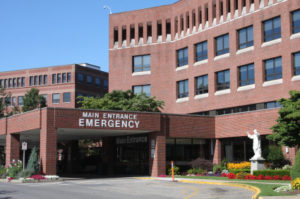 This area is served almost exclusively by Pennsylvania safety-net hospitals and recently suffered a major loss when one of those providers, Hahnemann University Hospital, closed its doors.
 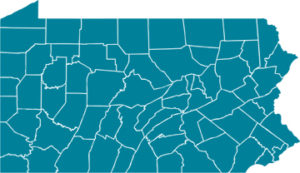 Pennsylvania rates will rise an average of four percent for individual plans and 9.7 percent for small groups, the state Insurance Department has announced. All insurers that offered plans in 2019 will do so again in 2020 and the exchange will include a new insurer and increased choice in some of the state’s 67 counties. Beginning in 2020, residents of only six counties will have only a single insurer offering individual plans.
 The Department of Human Services bulletin outlines the purpose of the new PDL, provides background information, and describes how the PDL was developed and will work. In addition, it lists the past Medical Assistance Bulletins rendered obsolete by the new bulletin and describes the prior authorization procedures that will be employed when the new program takes effect on January 1, 2020.
 Included in this month’s edition are articles about:
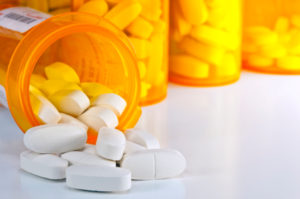 Earlier this year, the Department of Human Services announced its intention to implement a preferred drug list in the state’s Medicaid program. That PDL would apply to both the fee for service and managed care Medicaid programs.
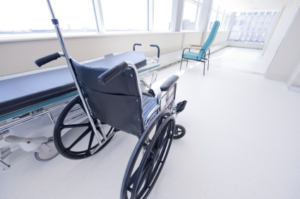 Today, Lyft is working with approximately 35 state Medicaid programs while Uber, at least so far, participates only in Arizona’s program.
 Instead, patients previously served by Hahnemann University Hospital, a Pennsylvania safety-net hospital that served especially large numbers of Medicaid and uninsured patients, are now being served by other safety-net hospitals in Philadelphia: mostly, Jefferson Health, the University of Pennsylvania Health System, Einstein Healthcare Network, and Temple University Hospital. All report increased volume in their emergency rooms, more ambulance arrivals, and more inpatient admissions, but at least so far, they also report that they are comfortably handling the increased patient volume created when Hahnemann closed its emergency room and discharged its last patients in July.