SNAPShots

SNAPShots

The Challenges Facing Pennsylvania’s Safety-Net Hospitals

With the arrival of a new governor and the start of a new legislative session, the Safety-Net Association of Pennsylvania (SNAP) has prepared a series of four papers for leaders of the new Wolf administration and legislative and committee leaders and staff.

Safety-Net Association of Pennsylvania logoThe second of those four papers describes the major health care and health policy challenges safety-net hospitals face.  Those challenges include:

  • the distinct patients safety-net hospitals serve
  • inadequate payments for Medicaid services
  • the large numbers of uninsured and underinsured patients safety-net hospitals serve
  • threats to vital state Medicaid supplemental payments, such as Medicaid disproportionate share payments (Medicaid DSH
  • continuing change and reform in the health care system, including the delivery of care and how safety-net hospitals are paid for their services

The first paper, “What is SNAP?”, was an introduction to the Safety-Net Association of Pennsylvania:  what safety-net hospitals are, where they are located, whom they serve, and how they differ from other acute-care hospitals in the state.
Find both SNAP papers here.

2015-01-23T06:00:07+00:00January 23rd, 2015|Safety-Net Association of Pennsylvania|Comments Off on The Challenges Facing Pennsylvania’s Safety-Net Hospitals

Feds Release Medicaid DSH “Uninsured” Definition

The Centers for Medicare & Medicaid Services (CMS) has published a new regulation that defines “uninsured” for the purpose of calculating the limit for how much individual hospitals may receive in Medicaid disproportionate share hospital payments (Medicaid DSH).
Under federal law, Medicaid DSH payments to hospitals cannot exceed the uncompensated costs of the services those hospitals provide to Medicaid recipients and the uninsured.  In calculating hospital-specific limits, according to the new regulation,

… the calculation of uncompensated care for purposes of the hospital-specific DSH limit will include the cost of each service furnished to an individual by that hospital for which the individual had no health insurance or other source of third party coverage.

Bookshelf with law booksThis regulation is important to Pennsylvania safety-net hospitals because they receive Medicaid DSH payments and serve more uninsured patients than the typical hospital.
Find the complete regulation here, in the Federal Register.

2014-12-08T06:00:42+00:00December 8th, 2014|Uncategorized|Comments Off on Feds Release Medicaid DSH “Uninsured” Definition

MACPAC Looks at Medicaid, CHIP Issues

The non-partisan federal agency charged with advising Congress, the Department of Health and Human Services, and the states on matters involving Medicaid and the Children’s Health Insurance Program (CHIP) met last week in Washington, D.C.
The Medicaid and CHIP Payment and Access Commission (MACPAC) addressed a number of CHIP-related issues during its September 18-19 meetings, including the future of the program, its funding, state experiences with CHIP changes, and consumer protections.
MACPAC also looked at a variety of Medicaid issues, including state Medicaid expansions through premium assistance, enrollment so far in 2014, the Centers for Medicare & Medicaid Services’ Medicaid program integrity plan, early experiences of new enrollees, and future reductions in Medicaid disproportionate share payments (Medicaid DSH).
CHIP and Medicaid are especially important for Pennsylvania’s safety-net hospitals because they serve so many low-income patients.  Those hospitals also are very concerned about future reductions in Medicaid DSH payments.
For a summary of the commission’s deliberations, see this CQ HealthBeat article presented by the Commonwealth Fund.
To see the presentations made during the two-day session go here, to MACPAC’s web site.

2014-09-23T06:00:28+00:00September 23rd, 2014|Uncategorized|Comments Off on MACPAC Looks at Medicaid, CHIP Issues

Study Points to Risk of DSH Cuts

A new study suggests that future cuts in Medicare disproportionate share (Medicare DSH) and Medicaid DSH payments could pose problems for hospitals that serve large numbers of uninsured patients.
According to a new report in the journal Health Affairs,

Such cuts in government funding of uncompensated care could pose challenges to some providers, particularly in states that have not adopted the Medicaid expansion or where implementation of health care reform is proceeding slowly.

Medicare DSH and Medicaid DSH payments help underwrite the uncompensated care hospitals provide to their uninsured patients.  These payments are a vital source of revenue for Pennsylvania’s safety-net hospitals and Pennsylvania is among the states that have not yet adopted Medicaid expansion.
Even after Affordable Care Act reforms take effect, 25 to 30 million Americans are expected to remain uninsured.  Medicare DSH payments are expected to decline $22.1 billion between now and 2019 and Medicaid DSH payments, temporarily delayed by two separate actions of Congress, are expected to decline $17.1 billion through 2020.
Learn more about the Health Affairs study in this Washington Post article and find the study itself here, on the web site of Health Affairs.

2014-05-07T06:00:01+00:00May 7th, 2014|Affordable Care Act, Health care reform, Pennsylvania Medicaid policy|Comments Off on Study Points to Risk of DSH Cuts

CMS Finalizes Medicaid DSH Cuts

The Centers for Medicare & Medicaid Services (CMS) has issued a final Medicaid disproportionate share (Medicaid DSH) regulation that cuts federal spending on Medicaid DSH $500 million in FY 2014 and $600 million in FY 2015.
The Medicaid DSH cuts were mandated by the Affordable Care Act in anticipation of every state expanding its Medicaid program.  The reform law’s Medicaid expansion mandate was later made optional by a Supreme Court ruling.
Medicaid DSH cuts will hurt all Pennsylvania safety-net hospitals, and the Safety-Net Association of Pennsylvania (SNAP) has conveyed its opposition to the cuts to CMS and also has asked members of Pennsylvania’s congressional delegation to support current legislation to delay the implementation of both Medicaid DSH and Medicare DSH cuts for two years.
While the Affordable Care Act calls for Medicaid DSH cuts through 2020, the new regulation covers only two years.  CMS has indicated that it will review its reduction methodology for future years.
Read more about the Medicaid DSH cut, why it was made, the objections to it, and future Medicaid DSH cuts in this CQ Healthbeat article presented by the Commonwealth Fund.

2013-09-20T06:00:29+00:00September 20th, 2013|Affordable Care Act, Pennsylvania Medicaid policy|Comments Off on CMS Finalizes Medicaid DSH Cuts

PA Posts FY 2013 Medicaid DSH Eligibility

The Pennsylvania Department of Public Welfare has published a notice in the Pennsylvania Bulletin listing all hospitals eligible for Medicaid disproportionate share adjustments (Medicaid DSH) during the state’s 2013 fiscal year.  See the Pennsylvania Bulletin notice here.

2013-08-21T11:38:38+00:00August 21st, 2013|Medicaid supplemental payments, Pennsylvania Bulletin|Comments Off on PA Posts FY 2013 Medicaid DSH Eligibility

DSH Delay Bill Picks Up Co-Sponsors

A bill that would delay implementation of Medicaid disproportionate share (Medicaid DSH) and Medicare DSH payment cuts for two years now has 46 co-sponsors in the U.S. House of Representatives.
H.R. 1920, the DSH Reduction Relief Act of 2103, would delay for two years the DSH cuts mandated by the Affordable Care Act.
The rationale underlying the proposal is that between some states choosing not to expand their Medicaid programs as the reform law envisioned and the delay in imposing the mandate for businesses to help their employees with health insurance, the expected rise in the rate of insurance will be slower than expected and hospitals that care for especially large numbers of low-income patients will have a greater need for DSH revenue than originally anticipated.
Because they serve so many more low-income patients than the typical acute-care hospital and Pennsylvania is not among the states planning to expand eligibility for Medicaid, the state’s safety-net hospitals are especially interested in this issue and have conveyed their support for the bill both to Congress and to the administration.
Read more about the proposed DSH delay bill and its prospects for passage in this CQ HealthBeat article presented by the Commonwealth Fund.

2013-07-19T06:00:20+00:00July 19th, 2013|Health care reform|Comments Off on DSH Delay Bill Picks Up Co-Sponsors

SNAP Asks PA Delegation to Back DSH Delay

SNAP has asked Pennsylvania’s congressional delegation in Washington to support a bill before the House that would delay planned cuts in Medicare disproportionate share hospital payments (Medicare DSH) and Medicaid DSH for two years.
H.R. 1920, the DSH Reduction Relief Act of 2013, would delay cuts mandated by the Affordable Care Act.
SNAP’s letter to the delegation notes that

These DSH cuts are scheduled to begin…before the Affordable Care Act’s Medicaid and insurance expansion provisions can even begin to have an effect; as you know, moreover, there currently is no plan to expand Medicaid eligibility in Pennsylvania.  In addition, the administration recently announced a one-year delay in the reform law’s employer health insurance mandate.  Together, Medicare DSH and Medicaid DSH cuts will amount to millions of dollars worth of reductions in payments that safety-net hospitals like ours need to serve their communities, and they would be coming at a time of great ambiguity as implementation of this aspect of the Affordable Care Act gets under way.

Read SNAP’s letter to the PA congressional delegation hereSafety-Net Association of Pennsylvania logo.

2013-07-15T06:00:17+00:00July 15th, 2013|Health care reform|Comments Off on SNAP Asks PA Delegation to Back DSH Delay

SNAP Registers Views on Proposed Medicaid DSH Regulation

In response to a requirement in the Affordable Care Act, the Centers for Medicare & Medicaid Services (CMS) has published a proposed regulation describing how it envisions reducing future Medicaid disproportionate share (Medicaid DSH) spending.
In response to that proposed regulation, SNAP has submitted a formal comment letter to CMS expressing support for some aspects of the proposal, offering recommendations for improving CMS’s proposed methodology, and conveying support for the administration’s budget proposal to delay all Medicaid DSH cuts for one year.
Read SNAP’s Medicaid DSH comment letter hereSafety-Net Association of Pennsylvania logo.

2013-07-11T06:00:49+00:00July 11th, 2013|Health care reform|Comments Off on SNAP Registers Views on Proposed Medicaid DSH Regulation

Congressman Calls for Delay on DSH Cuts

Cuts in Medicare DSH and Medicaid DSH payments, scheduled to be take effect beginning in FY 2014, would be delayed for two years under a new bill proposed in Congress.
Under the DSH Reduction Relief Act of 2013, Affordable Care Act-mandated cuts in Medicare disproportionate share payments (Medicare DSH) and Medicaid disproportionate share payments (Medicaid DSH) would not begin until FY 2016, instead of in FY 2014, as the reform law requires.
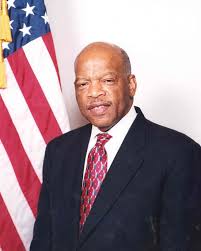
The bill was proposed by Representative John Lewis (D-GA).
Read more about The DSH Reduction Relief Act in this article from Becker’s Hospital Review.

2013-05-13T09:36:10+00:00May 13th, 2013|Health care reform|Comments Off on Congressman Calls for Delay on DSH Cuts
Go to Top