SNAPShots

SNAPShots

Senate Finance Committee Reports on Supplemental Medicaid Payments

The majority members of the Senate Finance Committee have published a report on supplemental Medicaid payments.

According to the new document,

This report seeks to increase educational understanding of Medicaid supplemental payments, as well as outline the reporting mechanisms for these payments to ensure adequate stewardship of taxpayer dollars. 

The report consists of descriptions of the different types of supplemental Medicaid payments that states make to some providers, including:

  • Medicaid disproportionate share payments (Medicaid DSH)
  • non-DSH payments
  • upper-payment limit payments (UPL payments)
  • demonstration supplemental payments
  • medical education payments

It also describes the magnitude of these payments, noting that supplemental Medicaid payments accounted for $50 billion of the $600 billion spent on Medicaid by the federal and state governments in 2016, the most recent year for which comprehensive data is available.  In addition, it outlines how those payments are distributed while also considering how these payments affect the overall adequacy of Medicaid payments to providers; this varies from state to state.

Finally, the report reviews how the states finance their Medicaid programs, including through provider taxes, intergovernmental transfers, and certified public expenditures, and how states report their supplemental Medicaid payments to the federal government.

All Pennsylvania safety-net hospitals receive supplemental payments from the state and consider those payments essential resources supporting their ability to serve the residents of the low-income communities in which they are generally located.

To learn more, see the report “Greater Transparency of Supplemental Payments Needed,” which was prepared by the majority staff of the Senate Finance Committee.

2019-05-06T06:00:12+00:00May 6th, 2019|DSH hospitals, Medicaid supplemental payments, Pennsylvania safety-net hospitals|Comments Off on Senate Finance Committee Reports on Supplemental Medicaid Payments

SNAP Asks Congress for Help on Medicaid DSH

Prevent Medicaid DSH cuts:  that is the message the Safety-Net Association of Pennsylvania conveyed to Pennsylvania’s congressional delegation this week.

Safety-Net Association of Pennsylvania logoIn a message sent to every member of the U.S. House of Representatives from Pennsylvania, SNAP asked members to sign onto a letter to House Speaker Nancy Pelosi asking her to delay Affordable Care Act-mandated cuts in Medicaid disproportionate share payments (Medicaid DSH) that are scheduled to take effect in October of this year.

If implemented, the cut would hurt 179 of Pennsylvania’s 213 hospitals, including all safety-net hospitals, and cost the state approximately $240 million in Medicaid DSH revenue in FY 2020 and $480 million a year in FYs 2021 through 2025.

See the letter requesting action on Medicaid DSH cuts here and SNAP’s message to Pennsylvania’s congressional delegation here.

MACPAC Recommends Changes in Medicaid Shortfall Definition

Hospitals’ calculation of their Medicaid shortfall would change under a recommendation that MACPAC voted to make to Congress.  That change, in turn, could affect hospitals’ future Medicaid disproportionate share payments.

Last week the Medicaid and CHIP Payment and Access Commission voted overwhelmingly to change how hospitals calculate their Medicaid shortfall:  the difference between what they spend caring for their Medicaid patients and what Medicaid pays them for that care.  Under MACPAC’s proposal, hospitals would need to deduct from their shortfall total all third-party payments they receive for the care they provide to their Medicaid patients.
If this proposal were to be adopted, it has the potential of changing Medicaid DSH allocations among the states and change the distribution of Medicaid DSH funds within individual states, although the Congressional Budget Office estimates that it would have little impact on either measure.

Complicating the MACPAC recommendation is last year’s federal court ruling that third-party payments could not be deducted from hospitals’ Medicaid shortfall totals because the Centers for Medicare & Medicaid Services lacks the authority to implement such a policy.  Making such a change therefore would require action by Congress.

Learn more about the MACPAC recommendation and its potential implications for hospitals and their Medicaid DSH payments in the Fierce Healthcare article “’Medicaid shortfall’ definition should change when tallying DSH payments, MACPAC says.”


2019-04-19T06:00:38+00:00April 19th, 2019|DSH hospitals, Federal Medicaid issues, Medicaid supplemental payments|Comments Off on MACPAC Recommends Changes in Medicaid Shortfall Definition

Delay Medicaid DSH Cut, Pelosi Says

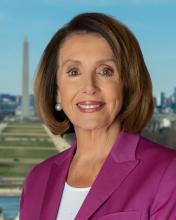
Medicaid DSH cuts should be delayed, House Speaker Nancy Pelosi (D-CA) told a gathering of hospital officials.

According to Speaker Pelosi,

DSH cuts threaten to erode the health of community hospitals, safety-net hospitals and rural hospitals, [affecting] the health of not only the families that rely on Medicaid, but any person who relies on these hospitals for care.

SNAP members all receive Medicaid DSH payments and would be harmed if the scheduled cut takes effect on October 1.

Learn more about Speaker Pelosi’s remarks in the Becker’s Hospital Review article “House speaker urges Congress to ease Medicaid payment cuts to hospitals serving low-income patients.”

2019-04-15T06:00:36+00:00April 15th, 2019|DSH hospitals, Federal Medicaid issues, Medicaid supplemental payments, Pennsylvania safety-net hospitals|Comments Off on Delay Medicaid DSH Cut, Pelosi Says

MACPAC Makes DSH, UPL Recommendations

Changes could come in Medicaid DSH and UPL payments if new MACPAC recommendations are adopted.

Last week the Medicaid and CHIP Payment and Access Commission released its annual report to Congress, with most of the report focusing on its analysis and recommendations for policy updates involving Medicaid disproportionate share hospital payments (Medicaid DSH) and Medicaid upper payment limit payments (UPL payments).

With Affordable Care Act-mandated cuts in Medicaid DSH payments scheduled to start in FY 2020 – this coming October – MACPAC recommended that these cuts be reduced and phased in over a longer period of time “…to give states and hospitals more time to respond to the cuts…”

MACPAC also recommended that Congress and the administration revise the current methodology for distributing Medicaid DSH money to the states to “…provide a stronger link between the distribution of those allotments and measures of hospital uncompensated care…”

The commission also addressed UPL payments, expressing concern about “…the discrepancy between reporting by states to show that they are complying with the UPL and the spending data they report to claim federal matching funds” and recommending “…instituting better data and process controls to ensure that state reporting on compliance with UPL lines up with those amounts they are claiming, and existing limits are enforced.

Medicaid DSH and UPL payments are especially important to SNAP and Pennsylvania safety-net hospitals because of the significant number of low-income, Medicaid-covered, and uninsured patients they serve.

Learn more from MACPAC’s news release summarizing its recommendations and the entire MACPAC annual report.

MACPAC: Slow Medicaid DSH Cuts

Slow the pace of scheduled cuts in Medicaid disproportionate share hospital payments (Medicaid DSH), the non-partisan agency that advises Congress and the administration will tell Congress in its next report of policy recommendations.

The Medicaid and CHIP Payment and Access Commission voted 16-1 recently to recommend to Congress that Medicaid DSH cuts, mandated by the Affordable Care Act but delayed three times by Congress, be reduced in size and spread out over a longer period of time.

Currently, Medicaid DSH allotments to the states are scheduled to be reduced $4 billion in FY 2020 and then $8 billion a year in FY 2021 through FY 2025.  MACPAC recommends that the cuts be reduced to $2 billion in FY 2020, $4 billion in FY 2021, $6 billion in FY 2022, and $8 billion a year from FY 2023 through FY 2029.

MACPAC commissioners also voted to urge Congress to restructure the manner in which Medicaid DSH allotments to the states are calculated based on the number of low-income individuals who reside in the states.

Most Pennsylvania safety-net hospitals receive Medicaid DSH payments and consider them a vital resource in helping to underwrite the uncompensated care they provide to uninsured patients.

MACPAC is a non-partisan legislative branch agency that provides policy and data analysis and makes recommendations to Congress, the Secretary of the U.S. Department of Health and Human Services, and the states on a wide array of issues affecting Medicaid and the State Children’s Health Insurance Program.

Learn more about MACPAC’s actions on Medicaid DSH in the Fierce Healthcare article “MACPAC calls for Congress to delay cuts to safety-net hospitals.”

2019-02-04T06:00:11+00:00February 4th, 2019|Affordable Care Act, DSH hospitals, Federal Medicaid issues, Medicaid supplemental payments, Pennsylvania safety-net hospitals|Comments Off on MACPAC: Slow Medicaid DSH Cuts

MACPAC Meets

The Medicaid and CHIP Payment and Access Commission met for two days last week in Washington, D.C.

The following is MACPAC’s own summary of the sessions.

Hospital payment was a key focus of MACPAC’s January meeting with the Commission voting on Thursday to approve two sets of recommendations, the first addressing the structure of disproportionate share hospital (DSH) allotment reductions and the second directed to improving compliance with upper payment limit requirements. Both sets of recommendations are slated for inclusion in MACPAC’s March 2019 Report to Congress on Medicaid and CHIP.

Later that morning, the Commission discussed a study on performance and return on investment for state program integrity strategies. This session was originally scheduled for the December meeting. Following a break for lunch, the Commission was briefed on a new report by Mathematica Policy Research, under contract to MACPAC, regarding beneficiary enrollment in the Financial Alignment Initiative, which is testing new approaches to integrating care for people who are dually eligible for Medicaid and Medicare. Later, staff presented an analysis of the factors affecting physician decisions to accept new Medicaid patients.

Friday’s sessions opened with a panel of experts discussing how utilization management policies are applied to medication-assisted treatment (MAT). Under the SUPPORT for Patients and Communities Act (P.L. 115-271), MACPAC is required to study utilization management policies related to MAT and report on these by late October 2019. The meeting concluded with its third and final session on hospital payment: how to account for third-party payments in the DSH definition of Medicaid shortfall.

Supporting the commissioners’ deliberations were the following presentations prepared by MACPAC staff.

  1. Improving the Structure of Disproportionate Share Hospital Allotment Reductions: Review of Chapter and Recommendation Drafts for the March 2019 Report
  2. Upper Payment Limit Compliance: Review of Draft Recommendations in the March 2019 Report
  3. Measuring Performance and Return on Investment for Program Integrity Strategies
  4. Factors Affecting Beneficiary Enrollment in the Financial Alignment Initiative
  5. Physician Acceptance of New Medicaid Patients: New Findings
  6. Utilization Management of Medication-Assisted Treatment
  7. Accounting for Third-Party Payments in the Disproportionate Share Hospital Definition of Medicaid Shortfall

Because SNAP members serve so many Medicaid patients, MACPAC’s deliberations are especially relevant to them because its recommendations often find their way into future Medicaid and CHIP policies.

MACPAC is a non-partisan legislative branch agency that provides policy and data analysis and makes recommendations to Congress, the Secretary of the U.S. Department of Health and Human Services, and the states on a wide array of issues affecting Medicaid and the State Children’s Health Insurance Program.

2019-01-29T06:00:09+00:00January 29th, 2019|DSH hospitals, Federal Medicaid issues, Medicaid supplemental payments|Comments Off on MACPAC Meets

The Continued Need for Medicaid DSH

While the Affordable Care Act has greatly increased the number of Americans with health insurance and reduced the demand for uncompensated care from hospitals, many hospitals still see significant numbers of uninsured patients.
Some of those patients simply have not taken advantage of the health reform law’s creation of easier access to affordable insurance while others live in states that have not expanded their Medicaid programs.
Hospitals that care for especially large numbers of such uninsured patients qualify for Medicaid disproportionate share hospital payments, commonly referred to as Medicaid DSH.  The purpose of these payments is to help these hospitals with the unreimbursed costs they incur caring for such patients.
The Affordable Care Act calls for reducing Medicaid DSH payments to hospitals.  Many hospitals and hospital groups oppose this cut and are asking Congress to block its implementation.  Pennsylvania’s safety-net hospitals benefit considerably from Medicaid DSH payments.
The Commonwealth Fund recently published a commentary calling for delaying scheduled Medicaid DSH cuts.  Go here to see the article “Keep Harmful Cuts in Federal Medicaid Disproportionate Share Hospital Payments at Bay.”

2017-12-27T06:00:23+00:00December 27th, 2017|Affordable Care Act, Federal Medicaid issues, Medicaid supplemental payments|Comments Off on The Continued Need for Medicaid DSH

MACPAC Meets

The non-partisan legislative branch agency that advises Congress, the administration, and the states on Medicaid and CHIP-related issues met recently in Washington, D.C.
The following is the Medicaid and CHIP Payment and Access Commission’s own summary of its meeting.

The December 2017 meeting of the Medicaid and CHIP Payment and Access Commission began with a brief update on the State Children’s Health Insurance Program (CHIP). Although federal funding for the CHIP expired at the end of September, legislation to renew funding was still pending in Congress. The Commission then heard from a panel discussing state tools to manage drug utilization and spending in Medicaid. Panelists included Renee Williams, director of clinical pharmacy services for TennCare; Doug Brown, Magellan Rx Management’s vice president for Medicaid drug rebate management; and John Coster, director of the Center for Medicaid and CHIP Services Division of Pharmacy at the Centers for Medicare & Medicaid Services. At the final morning session, Commissioners reviewed a draft March 2018 report chapter on streamlining Medicaid managed care authorities. The Commission voted to approve recommendations to Congress, but deferred action on a third recommendation for further discussion at its upcoming January 2018 meeting.

In the afternoon, MACPAC staff previewed highlights from the December 2017 MACStats: Medicaid and CHIP Data Book. MACStats pulls together Medicaid and CHIP data from multiple sources that often can be difficult to find. The collection is published annually and individual tables are updated throughout the year. The Commission then reviewed the draft March report chapter on telemedicine in Medicaid, and later in the day the Commission returned to the topic of prescription drugs, to explore potential recommendations on the Medicaid drug rebate program.

The final December sessions covered MACPAC’s annual analysis of disproportionate share hospital payments (a required element of its March reports), and findings from interviews with four states to better understand how they are implementing Section 1115 Medicaid-expansion waivers.

The following presentations, many with supporting documents, were offered during the MACPAC meeting:

  1. State Strategies for Managing Prescription Drug Spending
  2. Review of March Report Chapter: Streamlining Managed Care Authorities
  3. Highlights from MACStats
  4. Review of March Report Chapter: Telemedicine in Medicaid
  5. Potential Recommendations on Medicaid Outpatient Drug Rebates
  6. Review of Draft March Report Chapter: Analyzing Disproportionate Share Hospital Allotments to States
  7. Implementation of Section 1115 Medicaid Expansion Waivers: Findings from Structured Interviews in Four States
2017-12-19T06:00:26+00:00December 19th, 2017|Federal Medicaid issues|Comments Off on MACPAC Meets

House Members Seek Delay of DSH Cuts

221 members of the House of Representatives have written to House leaders asking them to delay cuts in Medicaid disproportionate share payments (Medicaid DSH) that are scheduled to begin on October 1.
The cuts, mandated by the Affordable Care Act, have already twice been delayed by Congress, both times for two years, and now, a majority of House members have written to House speaker Paul Ryan and minority leader Nancy Pelosi asking them to advance legislation to delay Medicaid DSH cuts once again.
The purpose of Medicaid DSH payments is to help hospitals that serve especially large numbers of low-income patients to absorb some of the losses they incur serving uninsured and underinsured people.  Pennsylvania safety-net hospitals receive, and greatly benefit from, Medicaid DSH payments.
See the letter to House leaders here and see NAUH’s letter to House members here.

2017-10-04T14:33:14+00:00October 4th, 2017|Federal Medicaid issues|Comments Off on House Members Seek Delay of DSH Cuts
Go to Top