SNAPShots

SNAPShots

The Proposed FY 2014 State Budget: Part 4 of 7

Medical Assistance Supplemental Payments

Last Tuesday, Pennsylvania Governor Tom Corbett unveiled his proposed state FY 2014 budget.  Later that day, members of the Safety-Net Association of Pennsylvania (SNAP) received a comprehensive memo outlining the governor’s budget proposal with an emphasis on the issues that matter most to the state’s 61 private safety-net hospitals.
Over a seven-day period, SNAP presents in this space the highlights of the governor’s budget, again with an emphasis on Medical Assistance and other matters of special interest to Pennsylvania’s safety-net hospitals.   Today, SNAP takes a look at what the proposed budget says about Medical Assistance supplemental payments.
Governor Corbett has proposed no change in the state’s spending on OB/NICU, burn center, and trauma center payments.  Because of the reduction in the state’s federal medical assistance percentage (FMAP, or the rate at which the federal government matches state Medicaid spending), total payments to hospitals in each of these programs stands to decline 1.7 percent.
The total amount available for tobacco uncompensated care payments is slated for a 3.3 percent decrease, from $56.5 million to $54.7 million.  This reflects two factors:  a 1.7 percent decrease in money available from the tobacco settlement fund and the state’s reduced FMAP rate.
While total funding for physician practice plans is slated for an 18.9 percent decrease, this appears to reflect a decision to remove from this category one hospital that was added to the group last year.  This would mean funding for physician practice plans would remain the same – as it would for academic medical center disproportionate share hospital payments (DSH).
Critical access hospital payments have been targeted for a $500,000 cut in state funds.
Inpatient DSH, outpatient DSH, medical education, and Community Access Fund payments do not have their own line-items in the proposed budget and therefore cannot be specifically identified in that budget.  Traditionally, however, when an administration is contemplating changes in these payments, it indicates so in the programmatic revision commentary section of the budget document.  In the case of these four payments that are so vital to so many Pennsylvania safety-net hospitals, they were not mentioned in the programmatic revision commentary.
Next Monday:  Other Medical Assistance Issues

Financial paperwork
 

The Proposed FY 2014 Pennsylvania State Budget: Part 1 of 7

The Big Picture

Last Tuesday, Pennsylvania Governor Tom Corbett unveiled his proposed state FY 2014 budget.  Later that day, members of the Safety-Net Association of Pennsylvania (SNAP) received a comprehensive memo outlining the governor’s budget proposal with an emphasis on the issues that matter most to the state’s 61 private safety-net hospitals.
Over the next seven business days, SNAP will present the highlights of the governor’s budget, again with an emphasis on Medical Assistance and other matters of special interest to Pennsylvania’s safety-net hospitals.
The following is a schedule of the remaining six parts of this overview:
Safety-Net Association of Pennsylvania logo
Today:  the big picture underlying the proposed budget.
In this proposed budget, the Department of Public Welfare (DPW) projects a three percent increase in Medical Assistance enrollment and caseload in FY 2014.  Overall, the DPW budget calls for $14.2 billion in total spending on Medical Assistance – a decrease of less than half a percent from the current fiscal year’s available funding.
While some of the proposed changes in the budget are spending decisions, others reflect a reduction in the state’s federal medical assistance percentage, or FMAP (the rate at which the federal government matches state Medicaid spending), which will fall from its current 54.28 percent to an estimated 53.52 percent during FY 2014.  Consequently, in some cases, lower payments would reflect a reduced federal contribution rather than a state decision to reduce those payments.
The major themes of next year’s proposed Medical Assistance budget appear to be a continued state-wide expansion of the HealthChoices Medical Assistance managed care program and expanded access to community-based services for individuals with intellectual disabilities and the elderly.
The budget does not provide for the Medicaid expansion envisioned in the Affordable Care Act.  Governor Corbett has conveyed to the federal government that he will not expand Medicaid eligibility at this time but his document states that such expansion will be the subject of further analysis and public discussion.
Tomorrow:  The Major Medical Assistance Spending Categories
 

Proposed State Budget: Implications for PA Safety-Net Hospitals

Yesterday, Pennsylvania Governor Tom Corbett unveiled his proposed FY 2014 budget in a speech to the state’s General Assembly.
Safety-Net Association of Pennsylvania logoThe Safety-Net Association of Pennsylvania (SNAP) has prepared a detailed summary of the budget proposal with an emphasis on provisions of particular importance to the state’s safety-net hospitals.  To receive a copy of this memo, please contact SNAP at info@pasafetynet.org.

2013-02-06T06:00:23+00:00February 6th, 2013|Medicaid supplemental payments, Pennsylvania Medicaid policy, Pennsylvania state budget issues, Safety-Net Association of Pennsylvania|Comments Off on Proposed State Budget: Implications for PA Safety-Net Hospitals

GAO Finds Problems With Medicaid DSH Payments

The U.S. Government Accountability Office (GAO) is now reviewing audits of states’ Medicaid disproportionate share payments (Medicaid DSH) to hospitals and is raising questions about states’ compliance with federal requirements for those payments.
Based on its analysis of state Medicaid DSH audits, GAO found that states are making Medicaid DSH payments to hospitals that exceed those hospitals’ uncompensated care costs and are inaccurately calculating those hospital uncompensated care costs.  The GAO also found that states are not always targeting their Medicaid DSH payments to the hospitals that provide the most uncompensated care.
States are required to submit audits and data as a condition of receiving Medicaid DSH funds from the federal government.  Currently, the Centers for Medicare & Medicaid Services (CMS) is not acting on the information it receives but will begin doing so after a transition period that ends when 2014 audits are completed.  In anticipation of that time, GAO is reviewing the information CMS receives for state compliance with six federal standards for Medicaid DSH payments.
This data also may eventually be used to help implement the Medicaid DSH payment reduction mandated under the Affordable Care Act.
According to the report, Pennsylvania did not provide some of the required data, so in several instances in which the document provides specific information about individual state performance, it has nothing about Pennsylvania.  It does note, however, that in FY 2007, six hospitals in the state received Medicaid payments greater than their Medicaid costs.
Because Pennsylvania’s safety-net hospitals care for so many uninsured and low-income patients and receive higher Medicaid DSH payments than other hospitals, they are far more dependent on these payments than other hospitals and will need to watch this situation closely in the future.
Learn more about GAO’s examination of Medicaid DSH payments – why it is undertaking this review, what it found, and how its findings may be used in the future – in the report More Transparency of and Accountability for Supplemental Payments are Needed, which can be found here, on GAO’s web site.

2012-12-28T06:00:33+00:00December 28th, 2012|Health care reform, Medicaid supplemental payments, Pennsylvania Medicaid policy|Comments Off on GAO Finds Problems With Medicaid DSH Payments

Pennsylvania and OB DSH Payments

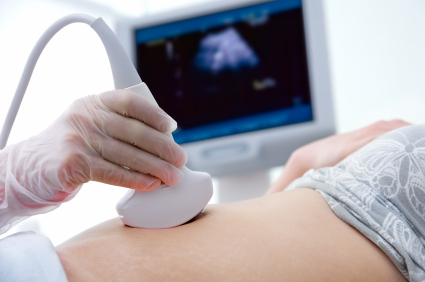
As part of a three-part series titled “Labor Pains,” the Philadelphia Business Journal has documented the OB/NICU disproportionate share (DSH) payments that Philadelphia-area hospitals have received from Pennsylvania’s Medicaid program since 2007.  Many of the recipients are safety-net hospitals, including a number of members of the Safety-Net Association of Pennsylvania (SNAP).
Read about the payments and why they were created and gain access to other parts of the “Labor Pains” series via this Philadelphia Business Journal articleDoctor giving patient an ultrasound.

2012-11-26T06:00:18+00:00November 26th, 2012|Medicaid supplemental payments, Pennsylvania Medicaid policy, Safety-Net Association of Pennsylvania|Comments Off on Pennsylvania and OB DSH Payments

DPW Notice Confirms FY 2012 Burn Center, Trauma Payment Cuts

The Pennsylvania Department of Public Welfare has published final notices confirming FY 2012 reductions in payments to burn centers and trauma disproportionate share (DSH) payments.
Both notices were published in the Pennsylvania Bulletin:  the burn center notice here and the trauma notice here.

2012-09-28T06:00:36+00:00September 28th, 2012|Medicaid supplemental payments, Pennsylvania Bulletin, Pennsylvania Medicaid laws and regulations, Pennsylvania Medicaid policy|Comments Off on DPW Notice Confirms FY 2012 Burn Center, Trauma Payment Cuts

DPW Issues Notice Governing Revised Payment Methodologies

The Pennsylvania Department of Public Welfare (DPW) has published a notice providing final notice of implementation of its revised Medical Assistance (MA) payment methodology for inpatient hospital services provided, on a fee-for-service (FFS) basis, in acute care general hospitals.  Additionally, the Department is giving final notice of its amended qualifying criteria and payment methodology for inpatient disproportionate share hospital (DSH), outpatient DSH supplemental and direct medical education (DME) payments and allocated funding for Fiscal Year (FY) 2010-2011 for these payments.  The Department is also providing final notice of the establishment of additional types of DSH and supplemental payments.”
This notice essentially describes the new eligibility criteria and payment methodologies arising from Act 49 and can be seen in its entirety in this Pennsylvania Bulletin notice.

2012-09-27T06:00:59+00:00September 27th, 2012|Medicaid supplemental payments, Pennsylvania Bulletin, Pennsylvania Medicaid laws and regulations, Pennsylvania Medicaid policy|Comments Off on DPW Issues Notice Governing Revised Payment Methodologies

DPW Issues DSH and Supplemental Payment Allocation Notice

The Pennsylvania Department of Public Welfare (DSH) has published a notice “announcing its intent to allocate funding for Fiscal Year (FY) 2012-2013 for several disproportionate share hospital (DSH) and supplemental hospital payments made to qualifying Medical Assistance (MA) enrolled hospitals.”
Among the allocations addressed in this notice are funds for inpatient disproportionate share payments (inpatient DSH), outpatient DSH payments, direct medical education (DME) payments, Medical Assistance stability payments, Medical Assistance dependency payments, Medical Assistance rehab adjustment payments, small and sole-community hospital payments, and enhanced outpatient DSH payments for selected providers.
Find the complete Pennsylvania Bulletin notice here.

2012-09-26T06:00:28+00:00September 26th, 2012|Medicaid supplemental payments, Pennsylvania Bulletin, Pennsylvania Medicaid laws and regulations, Pennsylvania Medicaid policy|Comments Off on DPW Issues DSH and Supplemental Payment Allocation Notice

DPW Issues DSH Notice

The Pennsylvania Department of Public Welfare (DPW) has published a notice “announcing its intent to allocate funding for several classes of disproportionate share hospital (DSH) payments made to qualifying Medical Assistance (MA) enrolled acute care general hospitals.”  These allocations include funding for FY 2013 critical access, OB/NICU, trauma, burn center, academic medical center, and other supplemental DSH payments.
Find the complete Pennsylvania Bulletin notice here.

DSH and the Affordable Care Act

The National Health Law Program has prepared a useful Q&A about how the Affordable Care Act and its Medicaid expansion will affect Medicare disproportionate share (Medicare DSH) and Medicaid disproportionate share (Medicaid DSH) payments, both of which are so important to Pennsylvania’s safety-net hospitals.

Download that summary here.

2012-07-19T06:00:21+00:00July 19th, 2012|Health care reform, Medicaid supplemental payments|Comments Off on DSH and the Affordable Care Act
Go to Top