


COVID-19 Update: Friday, October 9
The following is the latest COVID-19 information from the state and federal governments as of 2:15 p.m. on Friday, October 9.
Pennsylvania Update
Department of Human Services
 The Department of Human Services has been issued a section 1135 waiver by the Centers for Medicare & Medicaid Services. The waiver consists of two parts: it permits the provision of clinic services without the supervision of a physician or dentist and it permits the provision of inpatient psychiatric services to patients under the age of 21 without the direction of a physician. The purpose of section 1135 waivers is to give states greater flexibility to serve their Medicaid beneficiaries during the COVID-19 public health emergency. Go here to see the waiver issued to Pennsylvania.
Department of Health
- The Department of Health and Department of Human Services issued answers to frequently asked questions from long-term-care facilities about to the Secretary of Health’s August order on the procurement, distribution, and use of personal protective equipment.
- The Department of Health issued a health alert with updated testing and cohorting guidance for long-term-care facilities, including information on how to test after a new outbreak of COVID-19 and when a resident has been exposed in an outpatient or community setting. This guidance replaces guidance issued in late May.
- The Department of Health has issued a health alert with guidance for providers on reporting point-of-care COVID-19 tests.
- The Department of Health has issued an advisory notice on the use and interpretation of point-of-care antigen tests.
- In response to the rising rate of new cases in Berks County, the Department of Health has contracted for an outdoor testing site in Reading next Tuesday, October 13 through Saturday, October 17 that will be capable of testing up to 440 people a day at no charge.
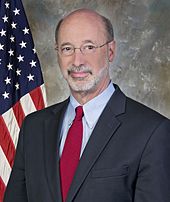
- Governor Wolf and Secretary of Health Levine have amended existing COVID-19 orders to allow for adjusted capacity to gathering limits while retaining mitigation tools, including wearing masks and maintaining social distancing. Learn more from the following resources:
- the news release, which includes detailed information about facility size and new occupancy limits
- Governor Wolf’s amended order
- Secretary Levine’s amended order
- an FAQ
Department of Health – by the numbers
 The number of new COVID-19 cases has been in four digits for four days in a row – the first time that has happened in more than four months.
- The number of people hospitalized with COVID-19 is up 32 percent since October 1.
- The number of COVID-19 patients currently breathing with the help of a ventilator is up 53 percent since October 1 and is at its highest level since August 20.
- Until today, deaths had been up in recent days but not outside the typical range over the past three months.
- With the new deaths reported today, the total number of COVID-19 deaths in Pennsylvania now exceeds 8300.
- Hospital bed capacity remains generally strong: 22 percent of adult ICU beds are currently unoccupied, as are 18 percent of medical/surgical beds, 32 percent of pediatric beds, 11 percent of pediatric ICU beds, and 38 percent of airborne isolation unit beds.
Federal Update
 Provider Relief Fund
- Five questions in the Provider Relief Fund FAQ have been modified with updated answers; they can be found on pages 14, 40, 41, 42, and 43. Most address the upcoming Phase 3 general distribution. Providers considering applying for a Phase 3 general distribution should review this new information carefully.
- The Provider Relief Fund has a new one-page fact sheet on the Phase 3 general distribution.
- The Provider Relief Fund web page also has introduced the new document “Phase 3 General Distribution: Learn About the Provider Relief Fund,” which offers a detailed explanation of how providers can determine whether they are eligible for a Phase 3 distribution and, if they believe they are, how to apply for that funding. Applications are now being accepted and the deadline for applying is November 6.
- HHS will hold a webcast on Thursday, October 15 at 3:00 (eastern) to give providers more information about the Phase 3 general distribution. Go here to register and submit questions.
Centers for Medicare & Medicaid Services
- CMS has published more information about the new terms for repaying Medicare loans the federal government made to providers through Medicare’s Advanced and Accelerated Payment Program. The new terms include a delayed deadline for beginning repayment, an extended period to make repayment, lower interest rates for those who do not repay their loans on time, and a process for seeking an extension on loan repayment. Learn more from the following resources:
- CMS’s announcement of the program’s repayment terms
- a fact sheet on the program changes
- an FAQ on the changes
CMS COVID-19 Stakeholder Calls
CMS hosts recurring stakeholder engagement sessions to share information related to its response to COVID-19. These sessions are open to members of the health care community and are intended to provide updates, share best practices among peers, and offer attendees an opportunity to ask questions of CMS and other subject matter experts.
Office Hours
Office Hour Calls provide an opportunity for hospitals, health systems, and providers to ask questions of agency officials regarding CMS’s temporary actions that empower local hospitals and health care systems to increase hospital capacity, expand the health care workforce, and promote telehealth in Medicare.
Tuesday, October 13 at 5:00 (eastern)
Toll Free Attendee Dial In: 833-614-0820; Access Passcode: 6379959
Audio Webcast link: https://engage.vevent.com/rt/cms2/index.jsp?seid=2607
Tuesday, October 27 at 5:00 (eastern) – dial-in and other information to be announced later.
Nursing Homes
Wednesday, October 14 at 4:30 (eastern)
Toll Free Attendee Dial-In: 833-614-0820; Access Passcode: 1897041 Audio Webcast Link: https://engage.vevent.com/rt/cms2/index.jsp?seid=2622
Wednesday, October 28 at 4:30 (eastern) – dial-in and other information to be announced later.
American Medical Association
The AMA has introduced new CPT codes for COVID-19 testing and for joint COVID-19/flu testing and other COVID-19-related activities.
 Food and Drug Administration
- The FDA has issued recommendations to health care providers on giving clear instructions to patients who self-collect nasal samples for COVID-19 in a health care setting.
- The FDA has announced that it will no longer review laboratory-developed tests for COVID-19, saying that it “…will not require premarket review of LDTs, to make the best use of our resources for the greatest public health benefit… FDA continues to prioritize review of EUA requests for POC [point of care] tests, home collection tests, at-home tests, tests that reduce reliance on test supplies, and high-throughput, widely distributed tests.”
Centers for Disease Control and Prevention
Resources to Consult
Pennsylvania Department of Human Services
Pennsylvania Department of Health
Centers for Disease Control and Prevention

 Included in this month’s edition are articles about:
 An Interagency Health Reform Council charged with developing recommendations on how to identify and capitalize on efficiencies in the existing health care system.
 Department of State
  HHS Secretary Azar has renewed the COVID-19 public health emergency declaration, which was set to expire on October 23. With this renewal, the CMS waivers made possible by the declaration will remain in effect until January 21 unless the emergency is renewed again. View the renewal notice
  The enrollment increase can be traced to rising unemployment, with many people losing their employer-sponsored health insurance. The new figures cover five months, from February through June, the latter four of which marked the beginning of the COVID-19 pandemic.
 Such a shift would be especially challenging for Pennsylvania safety-net hospitals because they already serve higher proportions of Medicaid and uninsured patients than the typical community hospital.
 Congress has passed, and the president has now signed,
  The NIH has
  The Courts